Italy: union win for Enel workers

In March workers from Enel went on strike opposing the changes of working hours arrangements, outsourcing of operations on the electricity grid and the refusal to renew an agreement on remote work which will affect Enel’s 30,000 employees.  A huge support for the strikes and a negotiation, which was attended by over 300 delegates from every area of Enel, led to the agreement.

After strong worker mobilization, operations will not be outsourced, and operational centers will be strengthened. An application for half-shift will be suspended and a joint commission will be set up to share the best solutions which will be tested no earlier than October this year, 2,000 new hires will be made where at least 1,600 will be additional hires (1100 by June 2025 and 500 by June 2026).

Regarding corporate welfare, the financing agreement will be stipulated with the aim of increasing and improving service to members. 

Going forward regarding smartworking the trade unions have included in the text of the agreement a declaration confirming that they want to start negotiations with Enel to define a new agreement which takes into account the company's and workers’ needs.

In a statement the unions said that they believe they have achieved great results and have laid solid foundations to resume mutual paths between workers and the company and will revoke all strike actions and give reports to workers on the agreement in the coming weeks.

IndustriALL director for energy, Diana Junquera Curiel, says:

“We congratulate our Italian affiliates on this result. With strike action over and an agreement in place, workers can now focus on moving forward and enjoying the fruits of their struggle. In February this year IndustriALL, jointly with PSI, wrote a letter to Enel condemning their actions and called on them to act responsibly. Their actions were in violation of the Global Framework Agreement (GFA) and the European Works Council Agreement by making decisions regarding the working conditions of Enel workers without their participation in decision making. We are pleased that they have behaved accordingly and found an agreement.” 

Photo: Shutterstock 
Italian metalworkers strike sends strong message to government

Italian metal unions FIM, FIOM and UILM are demanding a national strategy for a better future for key sectors where tens of thousands of jobs are at risk of being lost through downsizing, closure or relocation. This is the tragic situation in a cost-of-living crisis where at least half of working families are struggling. 

The Italian metalworkers’ unions said in a statement: 

“The strike action sent a strong signal to the government. They must now give us answers and quickly reconvene dialogue on the metal sectors and supply chains in difficulty. The government must clarify what industrial policies will be put into place and how much public investment will be attributed to protect the jobs, rights and wages. 

We are satisfied with the national strike. Work in the metal industry has always been central to the Italian economy and must become the driving force behind its future.”

The mobilisation took place against the backdrop of intensified efforts by the US and China to play an even more dominant role in global manufacturing and international trade. If Europe's industrial policy lags behind its competitors, Italy and the rest of Europe will lose jobs, wealth and strategic autonomy.

For years, Italy has seen its manufacturing base shrink considerably due to a lack of forward-looking industrial policy. In today's reality of environmental, digital, energy and technological transition, employment in the metalworking industry is clearly not on the government's agenda. This has led the country's three metalworkers' unions to raise awareness of the pressing needs of a sector that has been a mainstay of the Italian economy for generations. The four-hour strike by FIOM, FIM and UIL M on 7 July focused on:

  • Employment
  • Investment
  • Sustainable transition 
  • Resolution of urgent crises in several large companies
  • Loss of purchasing power and social conditions for workers in the manufacturing sector.

The unions point to the risk of a further deterioration in economic, industrial and social conditions, stressing the need to put the engineering industries back at the forefront of Italian politics. Moreover, the ecological and digital transition must be agreed with the workers through a fruitful social dialogue. 

  “IndustriALL stands in full support of our Italian affiliates. These are serious attacks on the Italian industrial model, the joint strike in the north and the south of Italy has sent a powerful unified message to the Italian government and will put the spotlight on the urgent need for action,”

says Atle Høie, IndustriALL general secretary.

United Italian metalworkers sign new national agreement

IndustriALL Global Union Italian affiliates FIOM-CGIL, FIM-CISL and UIL-UILM have concluded negotiations of a national collective agreement with significant results. An overall average salary increase of €112 (US$135) will be divided over four occasions during the agreement, which is valid from January 2021 until June 2024.  

“With this renewed agreement we want to defeat an unprecedented crisis through the salary increase of €112, plus protection and guarantees for many workers,”

says Rocco Palombella, UIL-UILM general secretary.

In addition to the increase, the agreement also includes a €12 (US$14) increase based on inflation for the minimum wage from June 2020. Other increases include €200 (US$242) per year of flexible benefits, as well as an increase of the employer’s contributions to the supplementary pension fund by 2.2 per cent from 2022 for young workers under 35.

A main achievement of the agreement is reforming the system of job classification, in place since 1973.

Francesca Re David, FIOM-CGIL general secretary, says:

“The agreement strengthens the legislation regarding trade union relations, information and participation rights, the right to training, the issue of health and safety and the fight against gender-based violence”.

The unions also managed to strengthen the industrial relations part of the agreement, and as a result, employment rights will be better protected. Workers will also enjoy improved rights for information, discussion, participation and training.

The new agreement will better protect workers’ individual rights, and the wording on gender-based violence and smart working including workers’ right to disconnect in off-office hours have significantly improved.

In addition, the clause on obligation to maintain the employment when the company concludes public procurement contracts will be introduced.

Roberto Benaglia, FIM-CISL general secretary, says:  

”It was a very difficult agreement to negotiate, perhaps one of the most difficult in recent decades, with the pandemic, an economic and social crisis to which we now add a political one.”

In the coming weeks, the agreement will be presented to workers in the country to vote on it.

Valter Sanches, IndustriALL general secretary, says:

“I congratulate our three affiliates FIM/CISL, FIOM/CGIL and UILM for the important achievement in very challenging times. It is certainly an inspiration for us all, not only because of the positive economic aspects but also because of the unity among the unions making this victory possible.”

Italian ArcelorMittal workers on nationwide strike for their jobs

For all the three Italian unions, former Ilva site is the strategic asset of the Italian steel industry, but since conclusion of the agreement on 6 September 2018,  ArcelorMittal has gradually weakened the site until it became unsustainable.

Considering the ongoing challenges faced by steel workers at ArcelorMittal Italia (ex Ilva), the unions insist on urgent measures to ensure the health and safety of the workers; immediate resumption of appropriate industrial relations, currently non-existent; and respect of the workers' rights to information and consultation.

In the same time workers demand for an industrial plan, defining the future of the group in Italy, including time for relaunch of installations that have been put on hold for years.

In addition, the unions find it imperative to create a social safety net to ease the hardships faced by workers, and the additional stress from the COVID-19 pandemic.

On 03-04 November 2020 IndustriALL Global Union’s ArcelorMittal Global Union Network with participation of more than 90 delegates from some 20 countries, met and received the reports from the union representatives about the situation at ex-Ilva site. The global union network extends their full support to their Italian fellow workers.

In his letter to the Italian affiliates, Valter Sanches, IndustriALL general secretary expressed solidarity with the unions’ strike action announced on 25 November and said,

“We strongly urge the company and the Italian government to meet with trade unions to agree on a clear way forward with solid and transparent plans for the future. We reiterate our full support to your struggle, and in particular we stand in solidarity with you tomorrow 25 November during nationwide day of action.”

Italian workers fight against closure of Whirlpool in Naples

The unions called for an eight-hour strike on October 22. The strike affects all the Italian sites of the group. The strike action is organized in conjunction with the meeting convened by the Ministry of Economic Development today. The results of the meeting are still to be announced.

The unions announced that on 23 October demonstrations will start in different cities of Italy until Whirlpool withdraws its decision to close its Naples site on October 31. Workers and their unions strongly oppose this decision as this affects all Whirlpool workers as well as those in related industries, and violates the agreement reached with the Ministry of Economic Development in 2018. Also, the unions insist that the decision to close the Naples site will gradually impoverish Italian skills and capacity in the production of household appliances.

According to the agreement signed in 2018 at the Ministry of Economic Development, Whirlpool committed to keeping Italy as a strategic industrial and market base for the European, Middle East and Africa region. The company then promised to invest €250 million for the three-year period from 2019 to 2021 in innovation, products and processes and research and development at its industrial sites in Italy.

Kan Matsuzaki, IndustriALL director of ICT, Electrical and Electronics, Shipbuilding and Shipbreaking: 

“We extend our full solidarity support to our affiliates and Whirlpool workers. The company’s decision to close down the Naples site in the middle of a pandemic and the rampant crisis cannot be justified.  The Italian government must put all their efforts in order to prevent this blow to the local economy, workers and their families. Whirlpool must stay in Naples!”

Four-hour strike at Italian ArcelorMittal sites brings results

As part of its support measures, the government publicly confirmed its intention to join the shareholding structure of the company, while in exchange, ArcelorMittal promised to maintain the group's presence in Italy. The CEO confirmed to formally and substantially keep all the commitments undertaken.

The pandemic and the subsequent downturn of demand aggravated the situation of the Italian steel mills, which are strongly dependent on the automotive industry, which is itself going through a very severe crisis itself at the moment. 

The strike became the second large protest since the easing of Covid-19 lockdown restrictions. During the first, hundreds of steelworkers rallied on 18 May outside the factory in Genoa protesting against layoffs and furloughs.

According to a statement by FIM-CISL general secretary Marco Bentivogli and national secretary Valerio D’Alò, during the meeting “the government communicated, especially considering the health emergency, that it had made exceptional measures available to the ArcelorMittal Group to enable it to manage the situation.” It was furthermore revealed that “an agreement was allegedly signed on March 4, 2020 and never presented to the trade unions.” 

FIM, FIOM, and UILM urged the government and ArcelorMittal to disclose their plans over the company’s future in Italy. In particular the unions demanded confirmation of the commitments made in the agreement concluded in September 2018, namely a pertinent business plan, consequent investments and corporate structures, employment levels and environmental remediation.

“To mitigate the occupational, economic and social disaster, the government must put in place special legislation for the ex-Ilva workers. It should foresee retirements or other legislative instruments for state-guaranteed employment outplacements. If this intervention is not done, there is a risk of strong social tensions, which we are not in a position to control”, commented UILM secretary general Rocco Palombella in his video conference.

In their turn, Francesca Re David, FIOM-CGIL general secretary and Gianni Venturi, FIOM-CGIL national secretary, and responsible for the steel sector, said, “If these commitments are confirmed, it means that at the end of the period covered by the new business plan, the total number of workers in ArcelorMittal would be 10,700, suggesting the exclusion of the approximately 1,700 workers still in extraordinary administration for whom a social safeguard clause was foreseen in the 2018 agreement.”

Valter Sanches, IndustriALL Global Union general secretary, jointly with Luc Triangle, European Trade Union industriAll general secretary, expressed solidarity with Italian affiliates and supported their demands, saying:

“It is imperative that ArcelorMittal minimize the economic and social impact of this pandemic on workers and their families and communities. The burden of the massive pressure on the steel industry in Europe and particularly in Italy resulting from the Covid-19 pandemic cannot only be carried by the workers.”

Electronics multinational Jabil fires 190 Italian workers during pandemic

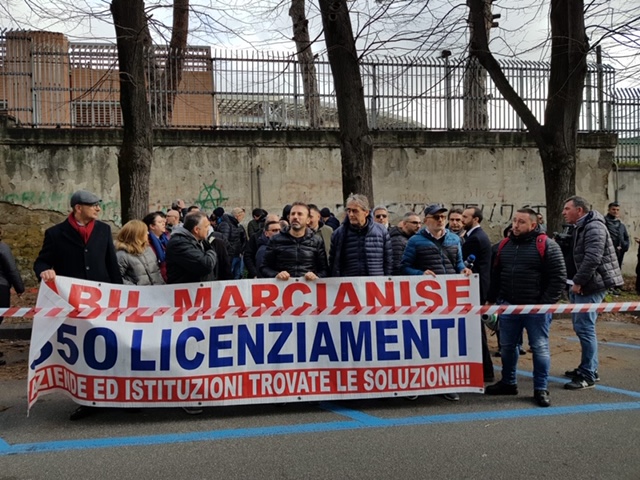
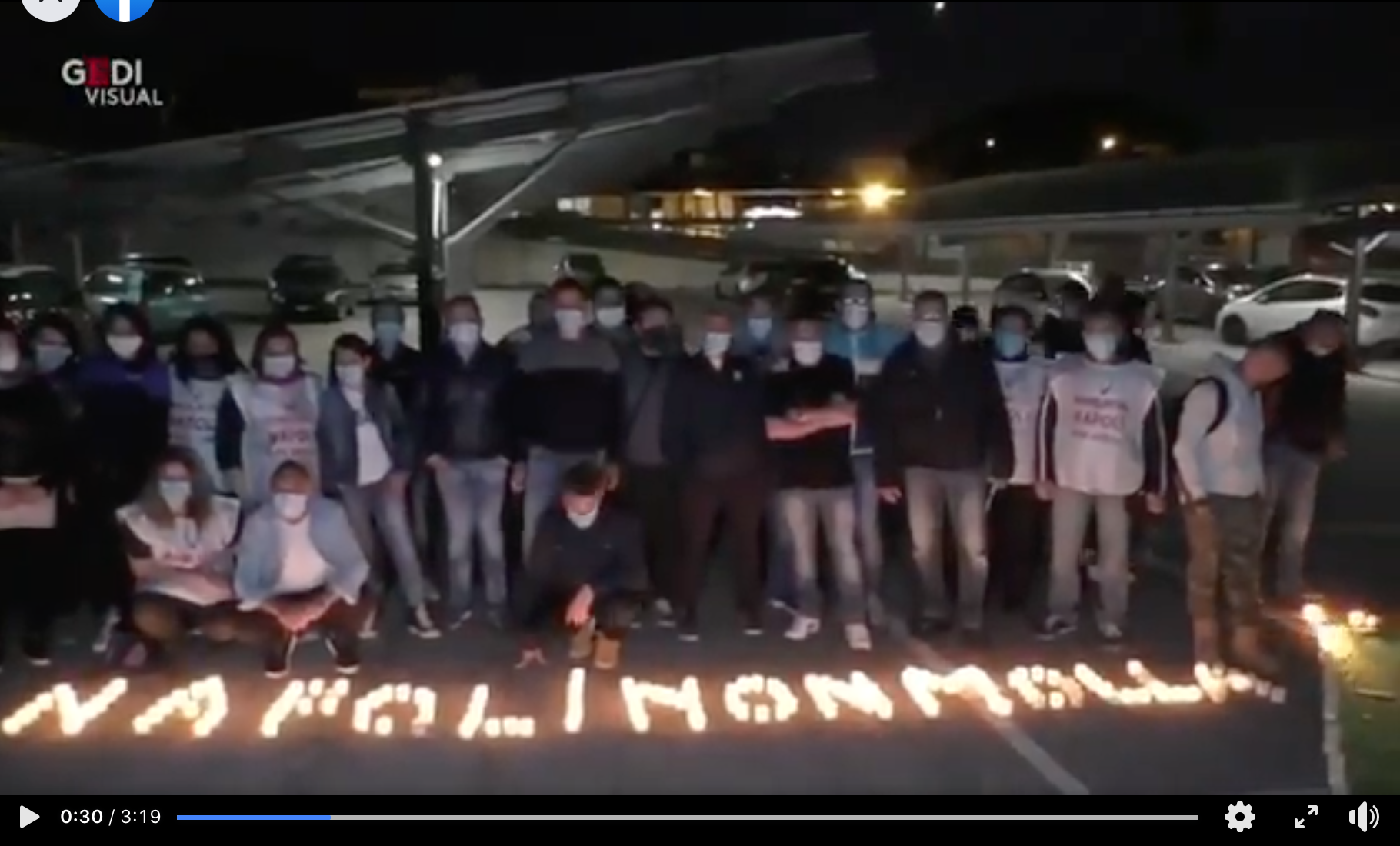
US headquartered electronics multinational Jabil announced that it was making 350 out of the 700 workers at the Marcianise plant redundant. After 160 workers took voluntary redundancy or were redeployed elsewhere, 190 workers find themselves on the streets from today, Monday 25 May.

This is despite a support package from the Italian government that bans layoffs until mid-August, in an attempt to save the economy in the midst of the health and economic emergency caused by Covid-19. The Italian government introduced the Relaunch Decree on 15 May, as part of a €155 billion package to get Italy back on its feet by supporting economic recovery, social cohesion and security.

The package includes a wage guarantee fund, grants to business, and moratoria on tax payments, utility bills and retrenchments. The company made commitments to the Ministry of Economic Development, which it has failed to honour.

IndustriALL Global Union affiliates FIOM-CGIL, FIM-CISL and UILM have reacted by pledging an indefinite strike. Unions are outraged at the lack of social solidarity, issuing a statement that condemned as “intolerable, illegal and villainous” the decision to "throw workers onto the street during a pandemic", and calling for a response from the government.


IndustriALL director for the electronics industry, Kan Matsuzaki said,

“Marcianise is in an economically depressed region near Naples in the south of Italy, and these layoffs with devastate local families. Jabil has taken advantage of the social security cushion provided by the Italian government and then laid off workers. This cynical and unethical action sets a very dangerous precedent.”

IndustriALL general secretary Valter Sanches wrote to the Italian subsidiary, demanding the reinstatement of the dismissed workers, saying:

“IndustriALL Global Union condemns in the strongest terms the company’s unilateral decision to dismiss 190 workers in the middle of the Covid-19 pandemic, without proper consultation with the concerned unions. We are extremely concerned about the lives and livelihoods of the dismissed workers and their families victimized by the company’s irresponsible action.”

Sanches also sent a letter of solidarity to the Italian unions.

Jabil, one of the world's largest electronics manufacturing multinationals, has 120 factories and two hundred thousand employees worldwide. The Marcianise plant primarily manufactures electronic circuit boards.

Italian metalworkers strike to halt non-essential production

Numerous metalworkers participated in an eight-hour general strike called on 25 March by Italian unions FIOM, FIM and UILM in Lombardy, the heaviest COVID-19 affected region in northern Italy. Local unions report about work abstention levels as high as 60 to 90 per cent in all the provinces of the region.

The high rate is partially explained by already implemented measures of smart working, interruption and reduction of working hours and other procedures put in place through the unions’ demands.

It is also a demonstration of support to union requests both in Lombardy and at the national level, demanding a closure of all non-essential production activities.

The unions decided on to the strike to persuade the government, which under pressure from the employers’ association Confindustria had approved a wide list of the companies allowed to continue production despite the pandemic.

According to FIOM, FIM and UILM companies currently have room for interpretation in what is considered an essential service, so many continue their activities.

In light of the current spread of the corona virus, the unions have declared:

“We believe that the list is too enlarged, also including sectors of dubious importance and necessity."

One example where work continued is a factory producing engines for hair dryers and vacuum cleaners.

Commenting on the results of the strike in a joint statement Fiom, Fim and Uilm said:

“The mobilization of the metalworkers was in support of the initiative of the national confederations [CGIL, CISL and UIL] vis-à-vis the government which has made itself available to review the list of essential activities that can therefore continue their operation. In these hours the exchange  between CGIL, CISL, UIL and the government has resumed and we hope will lead to the expected and requested results also through this strike. Stopping production activities for about ten days means reducing the possibility of contact between people and thus contain the chances of contagion, and this beneficial both for people’s health and our healthcare system which must be preserved from the risk of collapse.”

The unions will "ensure that all those who have to return to work will operate safely and with full respect for their health. We will not hesitate, as shown, to block activities that do not comply with health requirements and safety measures."

In a solidarity message, IndustriALL general secretary Valter Sanches, said:

"IndustriALL Global Union calls on the government of Italy to protect the health and safety of all the workers who continue to work because they are providing essential services or working in vital manufacturing industries during this pandemic. Furthermore, IndustriALL, in line with the statement from the council of global unions from 12 March, is calling for safe factories or simply shutting down workplaces.”

Italian metalworkers strike for sustainable industry

The strike, which took place at sites throughout Italy, comes at a time of great uncertainty about the future of the metal industry in Italy given decreasing industrial production, declining wages, and a growing number of accidents and deaths at work. Core demands include: ending the industrial and employment crises; reviving economic and social growth; restarting investments; increasing wages; respecting fundamental workers’ rights; involving workers in decision-making over the creation of new jobs; sharing the benefits of productivity increases stemming from new technologies; reforming social safety nets; and pushing for improvements in health protection and safety at work.

“Metalworkers are aware of their overall responsibility for the industry and the country and want to be protagonists in the great technological and ecological changes necessary to safeguard life and employment of those who work,” reads the joint statement of the unions FIOM, FIM and UILM.

They see the strike and mobilization as a necessary measure to pressure employers, the government and parliament to act as industry suffers in Italy. The unions said:

“There are currently 160 enterprises in crisis in the country with no solution in sight. It is necessary that companies and labour problems return to the centre of the political agenda through public and private investments aimed at relaunching economic and social growth and safeguarding employment and protecting health and safety.”

The joint statement further reads:

“In Italy we are witnessing an unbearable situation: the use of social safety nets is growing, announcements of closures of entire factories in all sectors from household appliances to the steel industry, automotive industry, electronics, information technology and installations. Restructuring processes too often guarantee profitability to companies while shifting the costs on workers. At the same time, work-related injuries and deaths increase. This situation is no longer acceptable.”

IndustriALL Global Union and IndustriAll European Trade Union sent a joint solidarity message to FIM-CISL, FIOM-CGIL and UILM before the strike and said:

“We fully support your struggle to increase employment through public and private investment in strategic sectors, generating quality jobs in an environmentally sustainable fashion.”

The unions Fim, Fiom and Uilm announced that this mobilization will continue with a national assembly of metalworkers on 20 November in Rome.

IndustriALL renews global agreement with energy company Eni

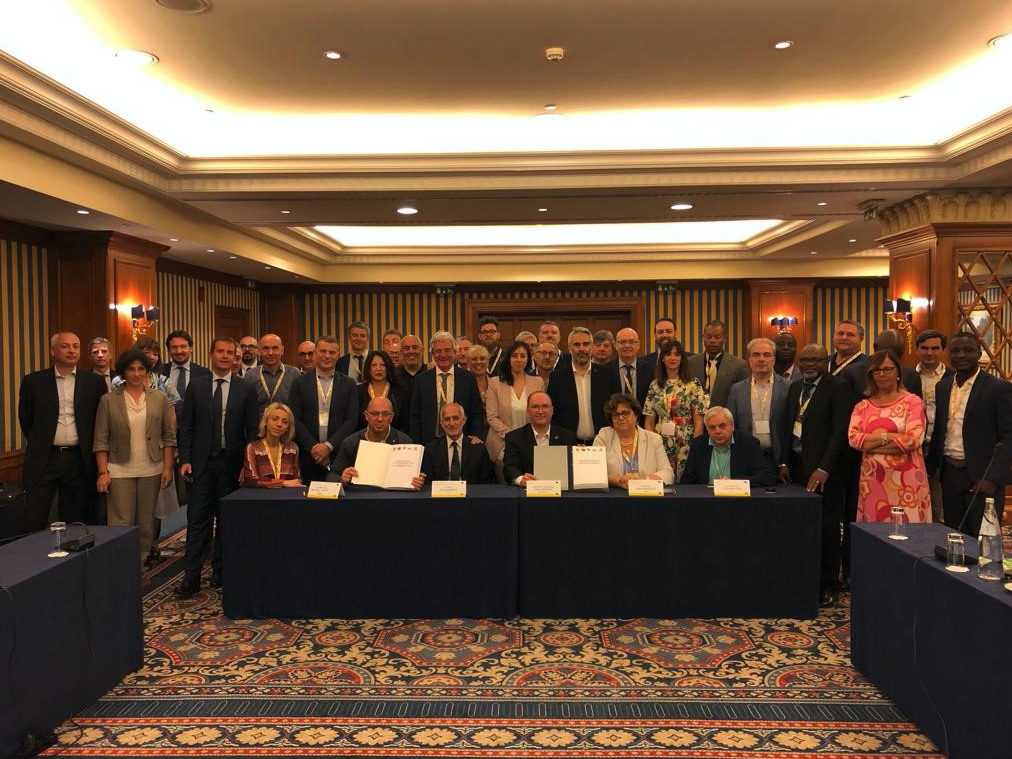
The GFA was signed between ENI industrial relations manger, Fabrizio Sbarra, and IndustriALL, general secretary, Valter Sanches, as well as representatives of Italian affiliated unions FILCTEM-CGIL, FEMCA-CISL and UILTEC-UIL, which were co-signatories.

The renewed GFA includes improvements in its human rights due diligence process to ensure its alignment with the UN guiding Principles on Business and Human Rights. 

Eni has also made a strong commitment to workers’ rights by collaborating with the ILO to produce a guide named “International Labour Standards and Eni”. It serves as a useful reference book to implement the GFA and ILO Conventions in countries where Eni is operating and which haven’t ratified fundamental conventions.

As the International Labour Conference overwhelmingly adopted a new convention to eliminate violence and harassment in the world of work on the same day as the signing, a paragraph was added to the GFA forbidding any form of violence or harassment, either sexual or based on personal and cultural diversity, without exception, and affirming that that the parties will not tolerate harassment, violence or bullying of any kind, whether inside the workplace or outside.  

The strengthened GFA puts greater emphasis on improving working conditions in supply chains, and a includes a new article on sustainable development and environmental protection in which the company commits to continue reducing the carbon intensity of its operations and investing in the development of low carbon energy products.

The GFA also includes the principle of a "Just Transition" for a meaningful transition towards economies and companies that are environmentally sustainable for all, in accordance with ILO guidelines.

Valter Sanches, General Secretary, said 

“With this renewed agreement, Eni has made a strong commitment to international labour standards and has agreed on providing a platform to negotiate with unions worldwide on the impacts of energy transition. We will be able use this global framework agreement to improve the rights and interests of our members at Eni operations across the globe.”

To support parenting, and in the frame of ILO Convention 183 on maternity protection, Eni grants 10 working days with 100 per cent of the annual salary to all the working fathers and mothers in the company. Maternity protection is essential to safeguard the health and safety of mother and child and for the equality of all women in the workforce.

Marcellino Tufo, from FILCTEM-CGIL and coordinator of the GFA said:

“We are convinced that the innovations introduced in the GFA can improve the conditions of workers and support the communities in which Eni operates. From today our task, together with IndustriALL, will be to transform what's written in the GFA into reality.”

 For the first time, a list of indicators has been added to the annex of the agreement to monitor the implementation of the agreement, as well as a dispute resolution mechanism to solve possible conflicts related to the GFA.

Patrizia Pitronaci, Head of the Uiltec-Uil international office, said:

“The ENI global agreement confirms the Italian multinational's willingness to respect standards established by the ILO. Great strides have been made and many improvements added.”

IndustriALL trade union affiliates at Eni at the GFA signing

Nora Garofalo, General Secretary of FEMCA-CISL summised:

"The renewed agreement is a model for everyone and is the result of constant dialogue between unions and the company based on shared values and principles in the field of human and labour rights.”

Eni is an integrated Italian energy company with 31,000 employees in approximately 67 countries worldwide. It is a key player in the exploration, refining and sale of petroleum products; the development and extraction of oil and natural gas; and the procurement, supply, trading and transport of natural gas, LNG, electric power, fuels and chemical products.

This site is registered on wpml.org as a development site.